A cove with a constitution
Most beaches on the Budva Riviera are about swimming. Drobni Pijesak is about swimming too, the water is so shallow and clear that children paddle out thirty metres before it reaches their waist, but it is also one of the rare beaches in the Mediterranean with a political history. For centuries this little sand crescent, tucked between two rocky headlands south of Sveti Stefan, was the meeting place of the Paštrovići bankada: an assembly of twelve judges drawn from the twelve brotherhoods of the Paštrovići clan, who gathered here in the open air to settle disputes, set tribal law, and ratify decisions that affected every village between Buljarica and Budva.
The fact that this assembly existed at all is remarkable. Under Venetian rule (1420–1797) the Paštrovići were granted a degree of self-government in exchange for loyalty and military service, and the bankada was the institution through which they exercised it. When the Venetians issued decrees affecting the coast, the Paštrovići elders read them aloud here, on the sand, before they took effect. After Venice fell, the assembly kept meeting, through Austrian rule, through independence, through the kingdom of Yugoslavia, until the institution finally dissolved in the early twentieth century.
Where the cove sits
Drobni Pijesak (literally "fine sand") lies on the coastal road between Sveti Stefan and Petrovac, roughly at the halfway point of that stretch. Driving south on the old Jadranska Magistrala from Budva, you pass Miločer Park, then Kamenovo, then Sveti Stefan. A few minutes past Sveti Stefan the road curves inland around a wooded headland; the turning to the cove is a steep, narrow driveway signposted for the beach restaurant. The cove itself is invisible from the main road.
The name is literal, the sand is genuinely finer than on most of the Riviera, which tends toward pebble or coarse grit. Why this one cove has fine sand when the beaches either side don't is apparently a question of local geology and how the two headlands funnel sediment.
Getting down to the beach
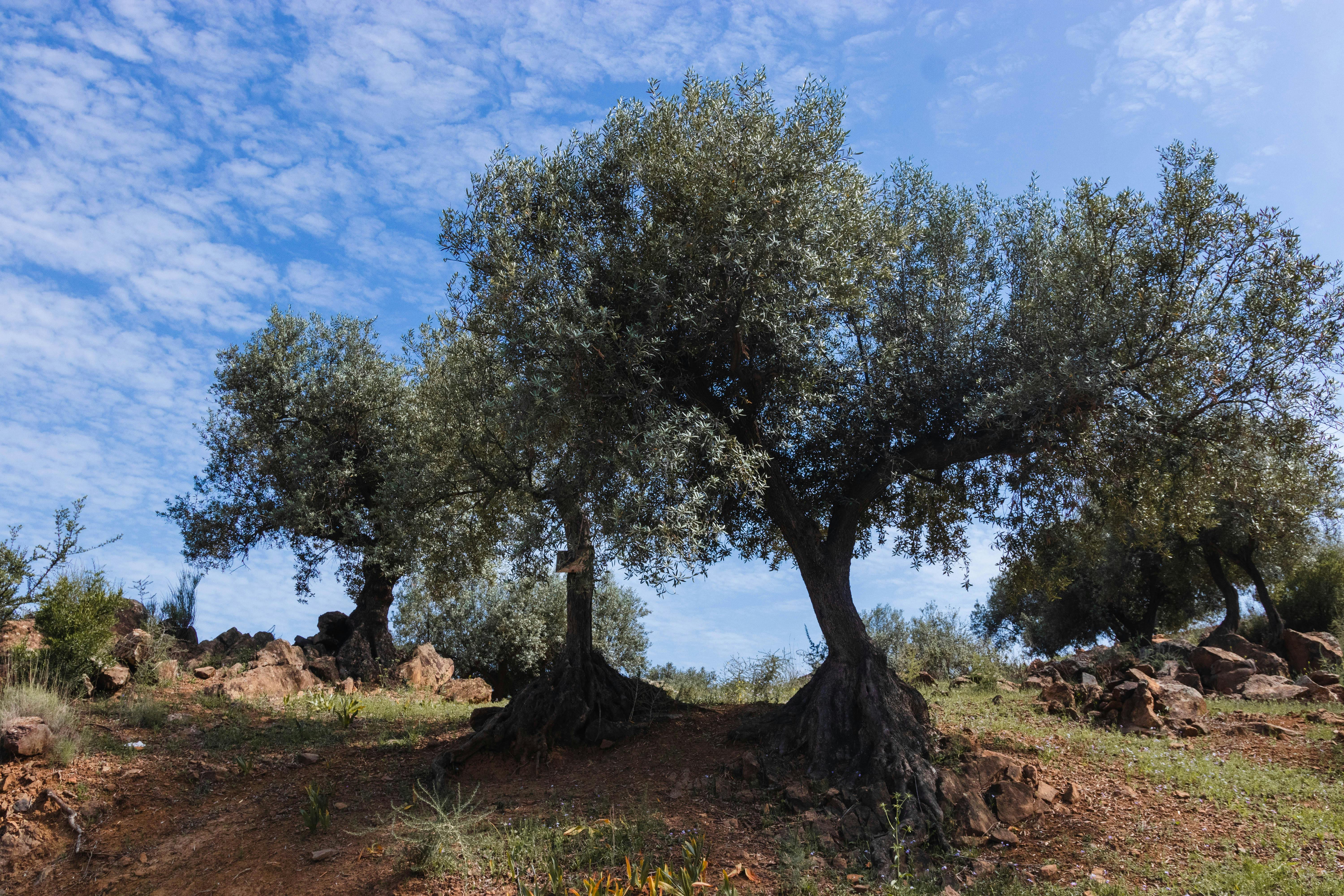
Two options. The first is the restaurant driveway, which ends in a small free car park a few dozen metres above the sand. The second, for non-customers during busy periods, is to continue south and park on the shoulder of the main road, then walk down the footpath, a few minutes' descent through pine and olive. Neither approach is especially long, but neither is step-free: the last section to the sand is on rough ground.
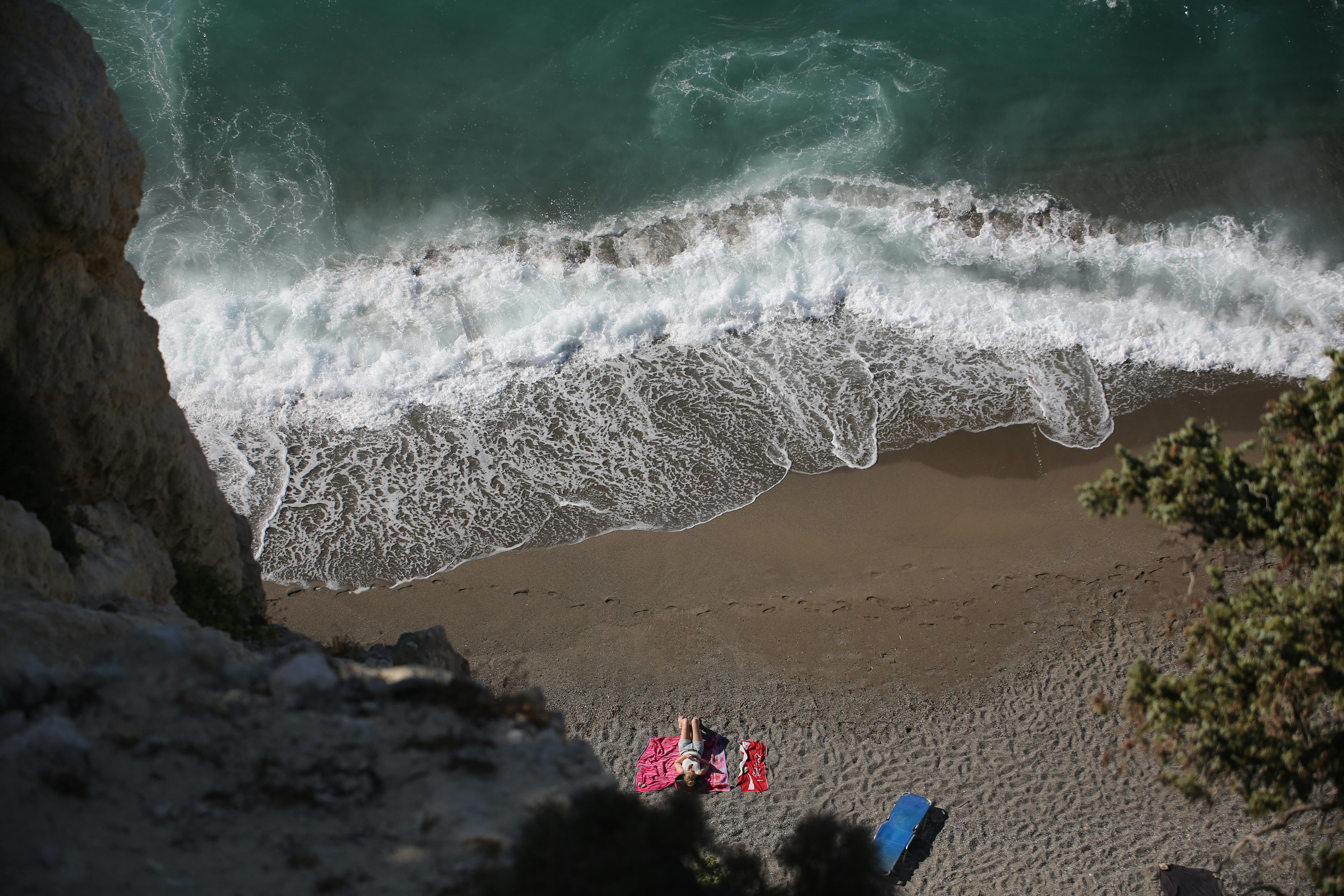
Because the cove is small, estimates put the beach itself at around 250 metres long, it fills quickly in July and August. A July afternoon will find sunbeds packed end-to-end; a June morning or a September weekday will be close to empty. Outside the summer season the cove is often entirely deserted.
The water
Drobni Pijesak faces roughly south-west and is sheltered by headlands on both sides, which means the swell that hits Sveti Stefan or Mogren in an onshore wind is noticeably reduced here. The water stays shallow for a long way out, thirty to forty metres of wading before it gets over head height, which makes it a favourite for families. The usual caveats of Adriatic swimming apply: the bottom is mixed sand and pebble, so soft-soled sandals or beach shoes are not a bad idea.
The bankada today
There is no monument on the beach to mark the historical significance of the site. A small stone cross a short walk inland, difficult to find without local guidance, is sometimes pointed to as the spot where the twelve judges sat, but the exact placement is uncertain enough that we won't claim it. What remains instead is the character of the place: a small bowl of sand enclosed by rock and pine, acoustically contained, exactly the sort of natural amphitheatre a pre-modern tribal assembly would have chosen for a meeting where everybody needed to hear what was being said.
If you want to read more about the Paštrovići and their mountain villages behind the coast, the Reževići Monastery, founded in 1226, sits just a few kilometres further south and has long been tied to the same clan.
Combining with other stops
Drobni Pijesak is almost always a secondary stop rather than a whole-day destination, the cove is too small to spend eight hours on it. A natural circuit from Budva is: morning in Sveti Stefan for photographs, mid-morning swim at Drobni Pijesak, lunch at the cove restaurant or in Petrovac, afternoon in Petrovac itself. That sequence covers the most photogenic section of the Riviera in half a day.
Practical notes
- Facilities: One restaurant with seasonal bar service, sunbeds and umbrellas for hire in summer. Toilets tied to the restaurant. No supermarket.
- Season: Full facilities roughly June–September. Off-season the cove is accessible but unstaffed.
- Parking: Small restaurant car park; roadside shoulder spaces nearby. Tight in high summer.
- Access: Final descent to sand is on rough ground, not suitable for wheelchairs or buggies.
Next
If you've driven this far, keep going another ten minutes south to Petrovac and the Reževići Monastery, or turn inland and climb the hills behind the coast.